WhatIsAnOrganismExplainedThroughScienceAndNature
Table of Contents
- Core Definition and Classification of Organisms
- Fundamental Definition and Biological Significance of Organisms
- Three Domains of Life: Comparative Characteristics
- Extremophiles: Adaptations to Extreme Environments
- Five-Kingdom Classification System and Hierarchical Taxonomy
- Prokaryotic vs. Eukaryotic Cells: Structural and Functional Differences
- Cellular Composition and Structure of Organisms
- Basic Components of a Cell and Their Roles in Maintaining Life
- Structure and Function of Organelles in Eukaryotic Cells
- Prokaryotic Cell Functions Without Membrane-Bound Organelles
- Real-World Applications of Cellular Structure Knowledge
- Metabolism and Energy Acquisition in Organisms
- Metabolic Pathways: Anabolism and Catabolism
- Autotrophic Organisms: Energy from Inorganic Sources
- Heterotrophic Organisms: External Nutrient Dependence
- Enzymatic Regulation of Metabolic Reactions
- Reproduction and Life Cycles of Organisms
- Modes of Reproduction: Asexual vs. Sexual Mechanisms
- Asexual Reproduction Methods and Cellular Processes
- Ecological Roles and Interactions of Organisms
- Trophic Levels and Energy Flow in Ecosystems
- Symbiotic Relationships and Their Ecological Significance
- Ecological Niches and Adaptive Strategies
- Population Dynamics and Growth Models
- Human Impacts on Organism Interactions
- Evolutionary Perspectives and Adaptations of Organisms
- Natural Selection and Adaptive Evolution: Case Studies
- Types of Adaptations: Structural, Physiological, and Behavioral
- Speciation Processes: Allopatric and Sympatric Mechanisms
- Evidence of Evolution: Fossil Records and Genetic Homology
From the microscopic bacteria thriving in boiling hot springs to the towering sequoias anchoring ancient forests, organisms form the backbone of life on Earth. Every living entity, regardless of size or complexity, shares fundamental traits—growth, reproduction, metabolism—that distinguish it from inert matter. Yet beneath this unity lies a staggering diversity, where organisms adapt to extremes, forge intricate relationships, and evolve over millennia to dominate ecosystems. Understanding what defines an organism unlocks the secrets of biology’s most profound questions: How do single cells build civilizations? Why do some species vanish while others flourish? The answers lie in the interplay of structure, function, and environment, a dance that has shaped life since its origins.
The study of organisms spans scales from the molecular to the global, revealing how a bacterium’s resilience to radiation mirrors a desert plant’s water conservation strategies. Classification systems like the three-domain model and five-kingdom hierarchy provide frameworks to navigate this complexity, while metabolic pathways and reproductive cycles expose the mechanisms sustaining life. Ecological interactions—whether symbiotic or predatory—further illustrate how organisms are not isolated entities but threads in an interconnected web. Evolution, the invisible hand guiding these adaptations, leaves behind a fossil record and genetic blueprints that rewrite our understanding of survival. This exploration does not merely define an organism; it charts the dynamic forces that have turned chemistry into consciousness, simplicity into sophistication, and chaos into order.
Core Definition and Classification of Organisms

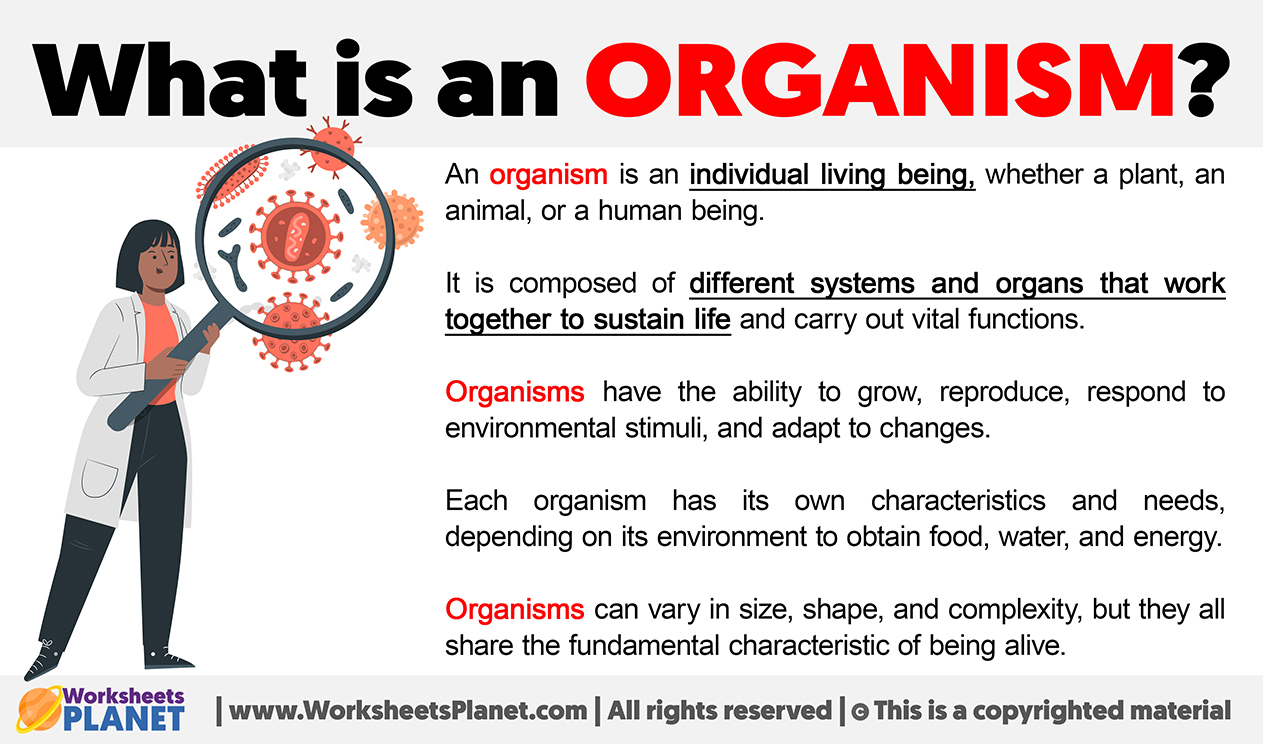
Organisms represent the fundamental units of biological organization, exhibiting self-sustaining life processes such as metabolism, growth, reproduction, and response to stimuli. Unlike non-living entities, organisms maintain homeostasis, evolve through genetic variation, and interact dynamically with their environments. This section explores the biological significance of organisms, their distinguishing features, and the systematic frameworks—three-domain and five-kingdom classifications—used to categorize life based on evolutionary, structural, and functional traits.
Fundamental Definition and Biological Significance of Organisms

Organisms are complex systems capable of autopoiesis, the ability to produce and maintain their own structure through continuous biochemical interactions. Key features that differentiate organisms from inanimate matter include: - Metabolic activity: Conversion of energy (e.g., photosynthesis, cellular respiration) to sustain physiological functions. - Genetic continuity: Reproduction via DNA/RNA, ensuring hereditary information across generations. - Adaptive evolution: Genetic mutations and natural selection drive species diversification over time. - Environmental interaction: Organisms respond to stimuli (e.g., tropisms in plants, predator avoidance in animals) and modify ecosystems (e.g., nitrogen fixation by bacteria).
These traits underscore organisms’ role as agents of ecological balance, from microbial decomposers to apex predators, each contributing to nutrient cycling, biodiversity, and atmospheric regulation.
Three Domains of Life: Comparative Characteristics
The three-domain system (proposed by Carl Woese in 1990) categorizes life into Bacteria, Archaea, and Eukarya, reflecting evolutionary divergence and molecular distinctions. Below is a comparative analysis of their defining features:
| Domain | Cell Type | Genetic Material | Cell Wall Composition | Reproduction | Ecological Role |
|---|---|---|---|---|---|
| Bacteria | Prokaryotic (no nucleus) | Single circular chromosome; plasmids | Peptidoglycan | Asexual (binary fission); horizontal gene transfer | Decomposers, pathogens, nitrogen fixers (e.g., E. coli, Streptomyces) |
| Archaea | Prokaryotic (no nucleus) | Single circular chromosome; introns in some genes | Pseudopeptidoglycan or proteins (e.g., S-layers) | Asexual; conjugation rare | Extremophiles, methane producers (e.g., Methanogens, Halophiles) |
| Eukarya | Eukaryotic (true nucleus) | Linear chromosomes; histones | Cellulose (plants), chitin (fungi), none (animals) | Sexual/asexual (mitosis/meiosis) | Producers (plants), consumers (animals), decomposers (fungi) |
Key Insight: While Bacteria and Archaea share prokaryotic simplicity, Archaea’s genetic and metabolic pathways (e.g., ether-linked lipids) align more closely with Eukarya, suggesting a shared ancestral lineage distinct from Bacteria.
Extremophiles: Adaptations to Extreme Environments
Extremophiles thrive in conditions lethal to most life forms, demonstrating biochemical innovations for survival. Their adaptations—thermophily, halophily, acidophily, piezophily—provide insights into life’s limits and potential extraterrestrial biology.
Examples of Extremophiles and Adaptations: - Thermophiles (e.g., Thermus aquaticus): Enzymes (e.g., Taq polymerase) remain stable at >80°C, leveraging protein chaperones and membrane lipids rich in saturated fats. - Halophiles (e.g., Haloarcula marismortui): Accumulate compatible solutes (e.g., glycine betaine) to counteract osmotic stress in >10% salinity environments like the Dead Sea. - Acidophiles (e.g., Picrophilus oshimae): Maintain internal pH via proton pumps and acid-resistant proteins, surviving at pH 0.06 (sulfuric acid mines).
Case Study: Deinococcus radiodurans and Radiation Resistance
Deinococcus radiodurans, a polyextremophile, withstands 1,000x lethal human radiation doses (5,000 Gy) through:
Extensive DNA repair mechanisms: Rapid excision of double-strand breaks via RecA-mediated recombination. Compact genome organization: Chromosomes clustered in nucleoid cores, minimizing radiation damage. Manganese-dependent antioxidant enzymes: Neutralizing reactive oxygen species (ROS) generated by radiation. Applications extend to bioremediation (e.g., uranium cleanup) and space biology (NASA’s extremophile research).
Five-Kingdom Classification System and Hierarchical Taxonomy
The five-kingdom classification (Robert Whittaker, 1969) organizes organisms into Monera, Protista, Fungi, Plantae, and Animalia, reflecting evolutionary complexity and nutritional modes. Below is the taxonomic hierarchy from broad to specific, illustrated through a flowchart-style breakdown:
1. Domain (Bacteria, Archaea, Eukarya) → Kingdom (e.g., Animalia) → Phylum (e.g., Chordata for vertebrates) → Class (e.g., Mammalia) → Order (e.g., Carnivora) → Family (e.g., Felidae) → Genus (e.g., Panthera) → Species (e.g., Panthera leo)
Kingdom-Specific Traits: - Monera: Prokaryotes (Bacteria/Archaea); unicellular; autotrophic/heterotrophic. - Protista: Eukaryotic; diverse (algae, protozoa); primarily aquatic. - Fungi: Heterotrophic; chitinous cell walls; decomposers/symbionts. - Plantae: Multicellular autotrophs; cellulose cell walls; photosynthetic. - Animalia: Multicellular heterotrophs; motile; nervous/tissue systems.
Example: Homo sapiens follows this path: Eukarya → Animalia → Chordata → Mammalia → Primates → Hominidae → Homo → Homo sapiens.
Prokaryotic vs. Eukaryotic Cells: Structural and Functional Differences
Cellular organization diverges fundamentally between prokaryotes (Bacteria/Archaea) and eukaryotes (Eukarya), influencing metabolism, reproduction, and ecological roles.
Structural Comparisons:
| Feature | Prokaryotic Cells | Eukaryotic Cells | |||||||||||||||||||||||||||||||||||||||||||||||||||||||||||||||||||||||||||||||||||||||||||||||||||||||
|---|---|---|---|---|---|---|---|---|---|---|---|---|---|---|---|---|---|---|---|---|---|---|---|---|---|---|---|---|---|---|---|---|---|---|---|---|---|---|---|---|---|---|---|---|---|---|---|---|---|---|---|---|---|---|---|---|---|---|---|---|---|---|---|---|---|---|---|---|---|---|---|---|---|---|---|---|---|---|---|---|---|---|---|---|---|---|---|---|---|---|---|---|---|---|---|---|---|---|---|---|---|---|---|---|---|
| Nucleus | Absent; DNA in nucleoid region | Membrane-bound; DNA organized with histones | |||||||||||||||||||||||||||||||||||||||||||||||||||||||||||||||||||||||||||||||||||||||||||||||||||||||
Cellular Composition and Structure of OrganismsCells serve as the fundamental building blocks of all living organisms, governing life’s processes through intricate structures and specialized functions. From the simplest prokaryotic cells to the complex multicellular systems, cellular architecture dictates how organisms interact with their environment, replicate, and sustain metabolic activities. Understanding cellular composition—including membranes, genetic material, and organelles—reveals how life operates at a microscopic scale, with direct implications for medicine, biotechnology, and evolutionary biology.Basic Components of a Cell and Their Roles in Maintaining LifeAll cells, whether prokaryotic or eukaryotic, share core components essential for survival: the plasma membrane, cytoplasm, and genetic material. These structures work synergistically to regulate cellular functions, maintain homeostasis, and enable reproduction. Visualizing Cellular Components (Annotated Descriptions):Structure and Function of Organelles in Eukaryotic CellsEukaryotic cells contain membrane-bound organelles, each specialized for distinct physiological roles. These structures enhance efficiency by compartmentalizing biochemical processes, enabling complex multicellular organisms to thrive. Below is a summary of key organelles and their contributions:
Prokaryotic Cell Functions Without Membrane-Bound OrganellesProkaryotes, including bacteria like E. coli, lack organelles but execute essential functions through membrane-associated structures and specialized regions within the cytoplasm. Their efficiency lies in streamlined processes, often occurring at the plasma membrane or nucleoid. Step-by-Step Breakdown of Key Processes: 1. DNA Replication and Segregation:Real-World Applications of Cellular Structure KnowledgeUnderstanding cellular architecture has revolutionized industries ranging from medicine to sustainable energy. Two critical applications include drug development and synthetic biology, both leveraging cellular vulnerabilities or engineering novel functions. Drug Targeting:Metabolism and Energy Acquisition in OrganismsMetabolism represents the dynamic interplay of biochemical reactions that sustain life, governing growth, reproduction, and cellular maintenance. Central to this process is the balance between anabolism—the synthesis of complex molecules from simpler precursors—and catabolism, the breakdown of organic substances to release energy and raw materials. These pathways are intricately linked, with energy captured primarily as adenosine triphosphate (ATP), the universal currency of cellular energy. The efficiency and regulation of these reactions vary across organisms, reflecting their ecological roles and evolutionary adaptations. Understanding metabolism reveals how organisms harness energy from their environment, whether through sunlight, inorganic chemicals, or organic compounds.Metabolic Pathways: Anabolism and CatabolismMetabolism is divided into two complementary processes: anabolism (constructive metabolism) and catabolism (destructive metabolism). Anabolism consumes energy to build molecules essential for cellular structure and function, such as proteins, nucleic acids, and polysaccharides, while catabolism releases energy by degrading complex substances into simpler ones, often producing ATP and reducing power (e.g., NADH, FADH₂). The interplay between these pathways ensures cellular homeostasis, with catabolic reactions fueling anabolic processes through shared intermediates. The flowchart of energy transformations in metabolism begins with nutrient breakdown in catabolic pathways, such as glycolysis and the citric acid cycle (Krebs cycle), which generate high-energy electrons carried by NADH and FADH₂. These electrons enter the electron transport chain (ETC) in the mitochondrial membrane (in eukaryotes) or plasma membrane (in prokaryotes), where oxidative phosphorylation occurs, producing ATP via ATP synthase. The ETC also establishes a proton gradient, driving additional ATP synthesis. Conversely, anabolic pathways, such as gluconeogenesis or amino acid synthesis, utilize ATP and NADPH to assemble macromolecules from precursors like acetyl-CoA or ribose-5-phosphate.Key Metabolic Equation: Catabolism: C₆H₁₂O₆ + 6O₂ → 6CO₂ + 6H₂O + ~38 ATP (eukaryotes) Anabolism: CO₂ + NH₃ + ATP + NADPH → Amino Acids/Polysaccharides Autotrophic Organisms: Energy from Inorganic SourcesAutotrophs ("self-feeders") synthesize organic compounds from inorganic raw materials, primarily using energy derived from sunlight (photoautotrophs) or chemical reactions (chemoautotrophs). This group includes plants, algae, cyanobacteria, and certain bacteria, which form the foundation of food webs by producing biomass from CO₂ and water. Photoautotrophs harness solar energy via photosynthesis, a two-stage process occurring in chloroplasts (plants/algae) or thylakoid membranes (cyanobacteria). The light-dependent reactions capture photon energy to split water (photolysis), releasing oxygen and generating ATP and NADPH. These energy carriers fuel the light-independent reactions (Calvin cycle), where CO₂ is fixed into organic molecules (e.g., glucose) via the enzyme RuBisCO. The overall equation for photosynthesis is:6CO₂ + 6H₂O + Light Energy → C₆H₁₂O₆ + 6O₂Cyanobacteria, such as Synechococcus, employ similar mechanisms but lack chloroplasts, using specialized pigments like phycobilins to absorb light. Chemoautotrophs, including sulfur-oxidizing bacteria (Thiobacillus) and nitrifying bacteria (Nitrosomonas), derive energy from oxidizing inorganic compounds (e.g., H₂S, NH₃), producing ATP via chemiosmosis without sunlight. Their contributions are critical in nutrient cycling, particularly in deep-sea hydrothermal vents and nitrogen-poor soils. Heterotrophic Organisms: External Nutrient DependenceHeterotrophs ("other-feeders") rely on organic compounds from their environment, obtaining energy by consuming other organisms or their byproducts. This group encompasses animals, fungi, protozoa, and most bacteria, which have evolved diverse strategies to acquire nutrients. The table below categorizes heterotrophic nutrient acquisition strategies, highlighting ecological roles and metabolic adaptations:
Enzymatic Regulation of Metabolic ReactionsEnzymes are biological catalysts that accelerate metabolic reactions by lowering activation energy, often with high substrate specificity. Their efficiency is modulated through allosteric regulation, covalent modification, and feedback inhibition, ensuring metabolic pathways operate optimally. For example, hexokinase phosphorylates glucose to trap it in cells, while phosphofructokinase-1 (PFK-1) is allosterically activated by AMP (indicating low energy) and inhibited by ATP (high energy). Enzyme dysfunction can have profound physiological consequences. Lactase intolerance, affecting ~65% of the global population, arises from reduced lactase activity, leading to undigested lactose fermenting in the gut and causing bloating. Conversely, enzyme replacement therapies target metabolic disorders, such as Gaucher disease, where recombinant glucocerebrosidase restores lysosomal function. Inhibitors like statins (e.g., atorvastatin) block HMG-CoA reductase, reducing cholesterol synthesis in cardiovascular disease management. The lock-and-key model and induced-fit model explain enzyme specificity: active sites bind substrates with precision, often requiring cofactors (e.g., NAD⁺, Mg²⁺) or coenzymes (e.g., biotin, heme). Temperature and pH also influence enzyme activity, with most human enzymes functioning optimally at 37°C and pH 7.4. Extreme deviations denature proteins, halting metabolic processes.Reproduction and Life Cycles of OrganismsReproduction ensures the continuity of life across generations, driving genetic diversity and adaptation in ecosystems. Organisms employ diverse strategies—ranging from rapid, energy-efficient asexual methods to complex sexual processes—to propagate their species. These mechanisms are intricately linked to an organism’s cellular structure, metabolic demands, and environmental pressures. Understanding these processes reveals how evolution shapes survival strategies, from unicellular bacteria to multicellular plants and animals. Below, the distinctions between asexual and sexual reproduction, their cellular foundations, and the ecological significance of life cycle variations are explored.Modes of Reproduction: Asexual vs. Sexual MechanismsReproduction strategies vary widely across the biological kingdom, each with trade-offs in genetic uniformity, resource investment, and adaptability. Asexual reproduction relies on a single parent, producing genetically identical offspring (clones) through mitosis, while sexual reproduction involves two parents and meiosis, generating genetically unique progeny. The choice of reproductive mode reflects an organism’s ecological niche, environmental stability, and evolutionary pressures. Below is a comparative analysis of their advantages and disadvantages:
Asexual Reproduction Methods and Cellular ProcessesAsexual reproduction dominates in prokaryotes, fungi, plants, and some invertebrates, leveraging mitosis to produce offspring without gametes. The method chosen often correlates with an organism’s body plan and habitat. Below are key asexual strategies, visualized at the cellular level: Binary Fission Occurs in prokaryotes (e.g., bacteria) and some protists (e.g., Amoeba), where a single cell replicates its DNA and divides into two identical daughter cells. The process begins with chromosome duplication, followed by cytoplasmic division (cytokinesis) via a septum formation in bacteria or cleavage furrow in eukaryotes. Visualization Prompt: Depict a rod-shaped E. coli elongating, duplicating its circular chromosome, and splitting into two daughter cells via invagination of the plasma membrane. Budding Common in yeasts (e.g., Saccharomyces cerevisiae) and hydras, where a small outgrowth (bud) forms on the parent’s body. The bud develops its own nucleus via mitosis and eventually detaches. Visualization Prompt: Illustrate a yeast cell forming a protuberance with a new nucleus, growing larger until it pinches off as a separate cell. Highlight the asymmetric division where the parent retains most organelles. Fragmentation Used by sponges, starfish, and some plants (e.g., strawberries), where the parent organism breaks into fragments, each capable of regenerating into a new individual. Visualization Prompt: Show a starfish arm detaching and regenerating into a complete organism, emphasizing dedifferentiation of cells at the wound site to form new tissues. Spore Formation Dominant in fungi, ferns, and algae, spores are haploid or diploid reproductive cells resistant to harsh conditions. Meiosis (in diploid species) or mitosis (in haploid species) produces spores, which germinate under favorable conditions. Visualization Prompt: Annotate a fern sorus releasing haploid spores via meiosis, contrasting with bread mold (Rhizopus) producing haploid spores via mitotic division in sporangia.Ecological Roles and Interactions of OrganismsOrganisms do not exist in isolation; their survival and evolution depend on complex interactions within ecosystems. These relationships shape biodiversity, energy distribution, and ecological balance. From microscopic bacteria to towering trees, every species occupies a unique role in the web of life, influencing and being influenced by its environment. Understanding these dynamics reveals how ecosystems function, adapt, and respond to disturbances—both natural and human-induced.Trophic Levels and Energy Flow in EcosystemsEnergy transfer through ecosystems follows a hierarchical structure known as trophic levels, which categorize organisms based on their feeding relationships. Producers, primarily photosynthetic organisms like plants and algae, form the base by converting solar energy into chemical energy via photosynthesis. Consumers, including herbivores, carnivores, and omnivores, derive energy by feeding on other organisms, while decomposers—such as fungi and bacteria—break down dead matter, recycling nutrients back into the ecosystem. A pyramid diagram visually represents energy flow, with each tier depicting a trophic level. The base (producers) contains the highest biomass and energy, while successive levels (primary consumers, secondary consumers, etc.) diminish in size due to energy loss (typically 90% per transfer). For example, a grassland pyramid might show grasses at the bottom, grasshoppers as primary consumers, and birds of prey at the top. Constructing such diagrams involves:"Energy flow in ecosystems is unidirectional, following the second law of thermodynamics: usable energy decreases as it moves up trophic levels." Symbiotic Relationships and Their Ecological SignificanceSymbiosis describes close, long-term interactions between different species, where at least one participant benefits. These relationships can be mutualistic (both benefit), commensal (one benefits, the other unaffected), or parasitic (one benefits at the expense of the other). Mutualism drives co-evolution, while parasitism often triggers defensive adaptations in hosts. Below is a table summarizing key examples and their ecological impacts:
Ecological Niches and Adaptive StrategiesAn ecological niche encompasses an organism’s role, habitat, and functional adaptations within an ecosystem. Niches can be broad (generalists like raccoons) or specialized (e.g., koala feeding solely on eucalyptus leaves). Adaptations to niche constraints include:"G. Evelyn Hutchinson’s definition of niche: ‘The set of environmental conditions under which a species can persist, grow, and reproduce.’" Population Dynamics and Growth ModelsPopulation dynamics study how species numbers fluctuate over time, influenced by birth rates, death rates, immigration, and emigration. Two primary models describe growth patterns: 1. Exponential Growth: Unlimited resources lead to accelerating growth (e.g., J-shaped curve). Formula:dN/dt = rN (where r = intrinsic growth rate, N = population size).Example: Bacterial colonies in a petri dish (initial phase). 2. Logistic Growth: Resource limitations cap growth at carrying capacity (K), resulting in an S-shaped curve. Formula: dN/dt = rN(K − N)/K.Example: Deer populations in Yellowstone National Park, stabilized by food/water availability. Graphical representations plot population size (y-axis) against time (x-axis), with exponential curves rising steeply and logistic curves plateauing. Real-world deviations occur due to density-dependent factors (predation, disease) or independent factors (floods, fires). Human Impacts on Organism InteractionsAnthropogenic activities disrupt ecological balances, often with irreversible consequences. Invasive species thrive in new ecosystems without natural predators; the cane toad (Rhinella marina) in Australia exemplifies this, as its toxic skin harms native predators like quolls. Habitat destruction—such as deforestation for palm oil plantations—eradicates niches, while climate change alters trophic interactions (e.g., mismatched timing of predator-prey life cycles)."The cane toad’s introduction to Australia in 1935 aimed to control agricultural pests but became an ecological nightmare, costing an estimated $200 million annually in control efforts." Source: Australian Government Department of Agriculture, Fisheries and Forestry (2020).Coral bleaching, driven by ocean warming, disrupts symbiotic relationships between corals and Symbiodinium algae, leading to mass die-offs. These disruptions cascade through food webs, affecting fish populations and coastal economies. Mitigation efforts—such as controlled burns to reduce invasive species or coral restoration projects—highlight the urgency of preserving organism interactions for ecosystem resilience. Evolutionary Perspectives and Adaptations of OrganismsEvolutionary biology explores how organisms adapt, diversify, and persist over generations through mechanisms shaped by genetic variation and environmental pressures. At the core of this process lies natural selection, a theory proposed by Charles Darwin in On the Origin of Species (1859), which posits that traits conferring survival or reproductive advantages become more prevalent in populations. This section examines the mechanisms driving adaptations—from structural and physiological changes to behavioral strategies—while analyzing real-world case studies, speciation processes, and evidence supporting evolutionary theory. The discussion extends to modern interpretations, including punctuated equilibrium and gene flow, illustrating how evolutionary biology integrates historical patterns with contemporary genetic insights.Natural Selection and Adaptive Evolution: Case StudiesNatural selection acts on heritable traits within populations, favoring variations that enhance fitness in specific environments. Two iconic examples—Darwin’s finches (Geospiza spp.) and peppered moths (Biston betularia)—demonstrate how environmental shifts drive rapid evolutionary changes. Darwin’s Finches on the Galápagos Islands During Darwin’s 1835 expedition, he observed 14 finch species with distinct beak morphologies adapted to island-specific food sources. Studies by Peter and Rosemary Grant (1970s–present) revealed that droughts in the 1970s–80s caused seed sizes to increase, favoring finches with deeper, stronger beaks. Genetic analysis confirmed that beak shape correlated with survival rates, with populations evolving in just two to three generations. For instance, Geospiza scandens (vegetarian finch) showed a 10% increase in beak depth between 1973 and 1978, directly linked to seed hardness. Industrial Melanism in Peppered Moths During the Industrial Revolution, soot darkened tree bark in England, shifting the selective advantage from light-colored moths (camouflaged on lichen-covered bark) to dark Biston betularia. Bernard Kettlewell’s 1955 experiments demonstrated that bird predation reduced light-moth populations by 95% in polluted areas, while dark moths thrived. Post-industrial pollution controls reversed this trend, with light morphs reclaiming dominance by the 1990s. Genetic studies later confirmed that melanism was controlled by a single locus, with selection coefficients favoring dark alleles exceeding 0.9 in industrial zones.Types of Adaptations: Structural, Physiological, and BehavioralAdaptations enhance organismal survival through three primary mechanisms: structural (morphological), physiological (biochemical), and behavioral (ethological). Each category reflects trade-offs between energy investment, environmental constraints, and reproductive success. Structural adaptations modify anatomy for specific functions, often linked to niche specialization. For example:
Speciation Processes: Allopatric and Sympatric MechanismsSpeciation—the formation of new species—occurs when populations diverge genetically, often due to reproductive isolation. Two primary modes are allopatric speciation (geographic separation) and sympatric speciation (divergence without barriers). Allopatric Speciation This process, proposed by Ernst Mayr, requires physical barriers (e.g., mountains, rivers) to prevent gene flow. A classic example is the Galápagos finches, where volcanic eruptions isolated populations on different islands. Genetic drift and divergent selection led to 14 distinct species over 2–3 million years, with beak morphology diverging as much as 50% between species like Geospiza fortis (ground finch) and Geospiza scandens (vegetarian finch). Sympatric Speciation Sympatric divergence occurs without geographic isolation, often via polyploidy (in plants) or ecological niche partitioning. The apple maggot fly (Rhagoletis pomonella) provides a model: originally feeding on hawthorn fruit, a subset shifted to apples post-European colonization. Host-plant preference became genetically linked to mating season divergence, with flies now emerging 2–4 weeks earlier on apples, reducing hybrid viability by >90%. Phylogenetic Tree Interpretation Phylogenetic trees (e.g., cladograms) depict evolutionary relationships, with branching points (nodes) representing common ancestors. For example, the tree below (hypothetical for illustration) shows:Evidence of Evolution: Fossil Records and Genetic HomologyEvolutionary theory is supported by four pillars of evidence: fossil records, genetic homology, vestigial structures, and embryological similarities. These findings are organized chronologically below: 1. Fossil Records (1859–Present)An organism is more than a collection of cells or a biological blueprint—it is a testament to nature’s ingenuity, a product of 3.7 billion years of experimentation in survival. From extremophiles defying death in scorching vents to multicellular giants orchestrating symphonies of specialization, life’s diversity stems from a shared code: the ability to adapt, reproduce, and persist. The boundaries between domains blur as bacteria engineer ecosystems, fungi rewrite nutrient cycles, and humans manipulate genes to redefine organisms themselves. Yet every discovery, from antibiotic resistance in bacteria to the resilience of deep-sea vent communities, underscores a truth: organisms are not static; they evolve, interact, and shape the planet in ways both visible and invisible. To study them is to hold a mirror to life’s relentless creativity—and to grasp the delicate balance between existence and extinction. |
Leave a Comment
Comments are moderated before appearing. The data you submit is processed according to the Privacy Policy of Vetlife Archive.